
Your tutor knows
where you're
losing points.
We run diagnostics before your first lesson, then pick the tutor who fits them. A manager runs the plan, the pace and the test dates.

None of them
started here.
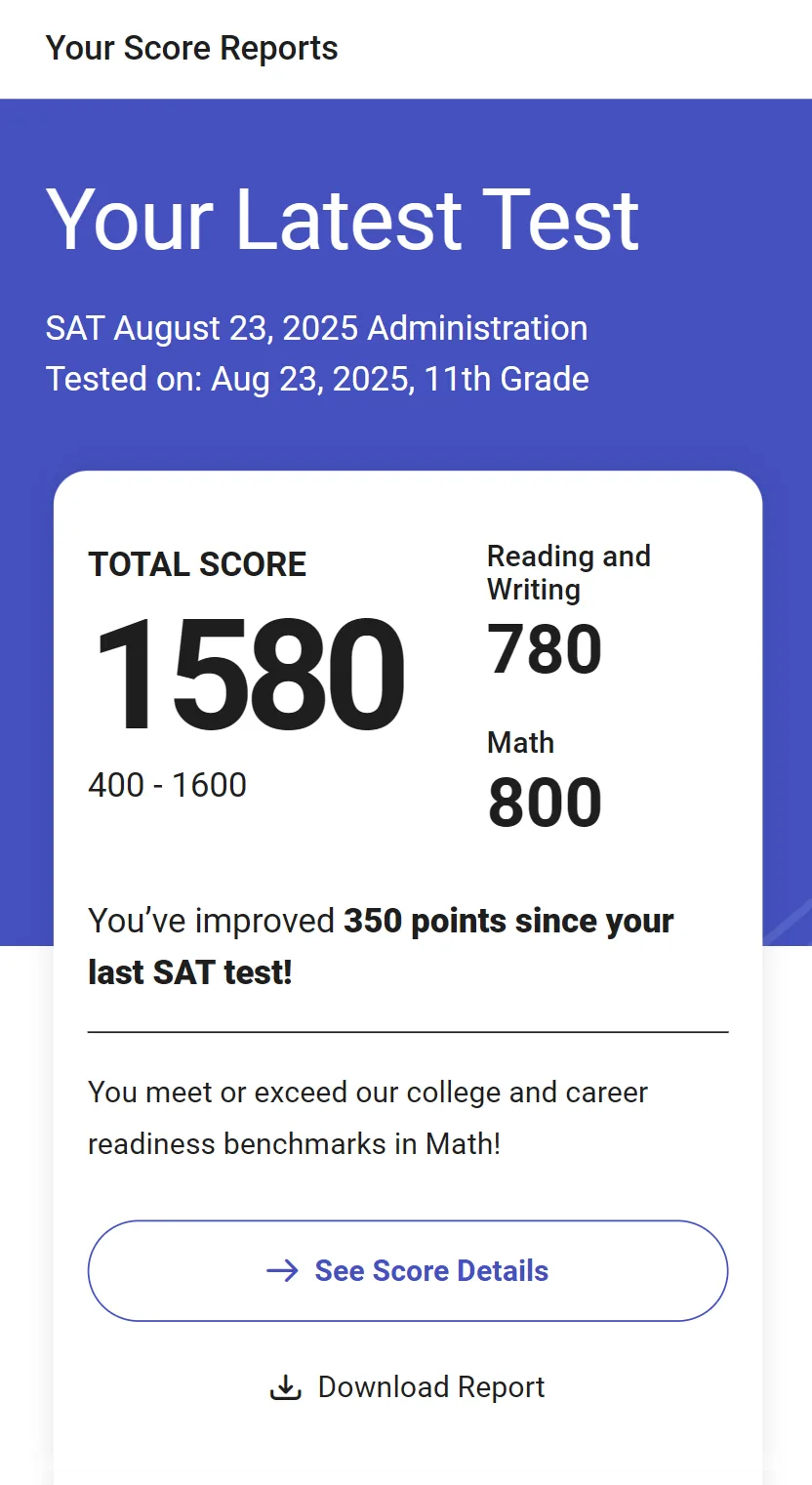
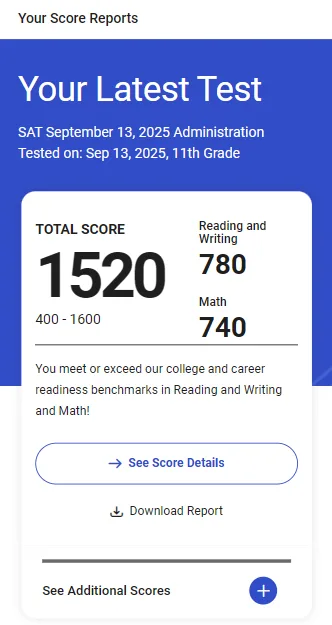
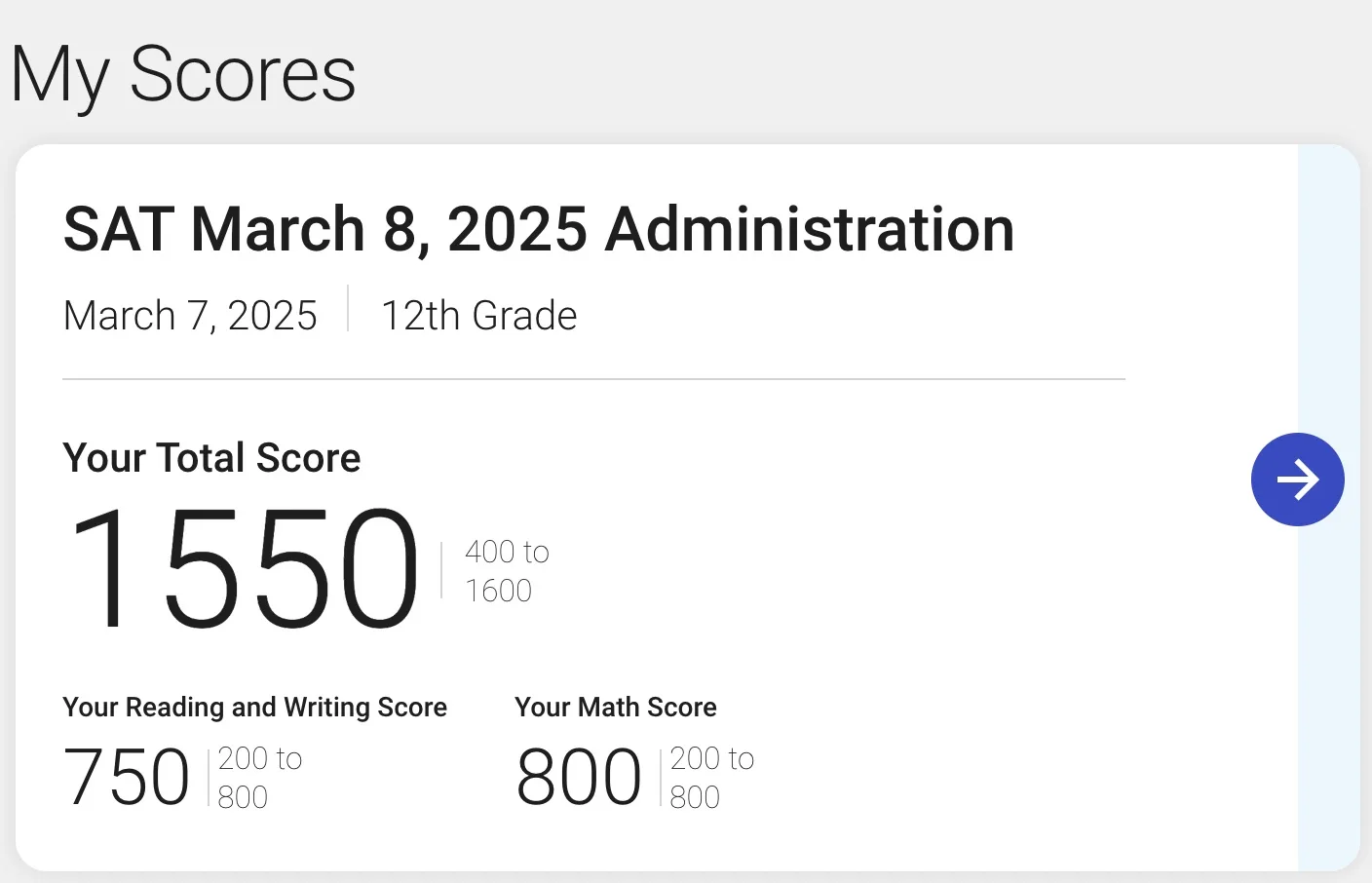
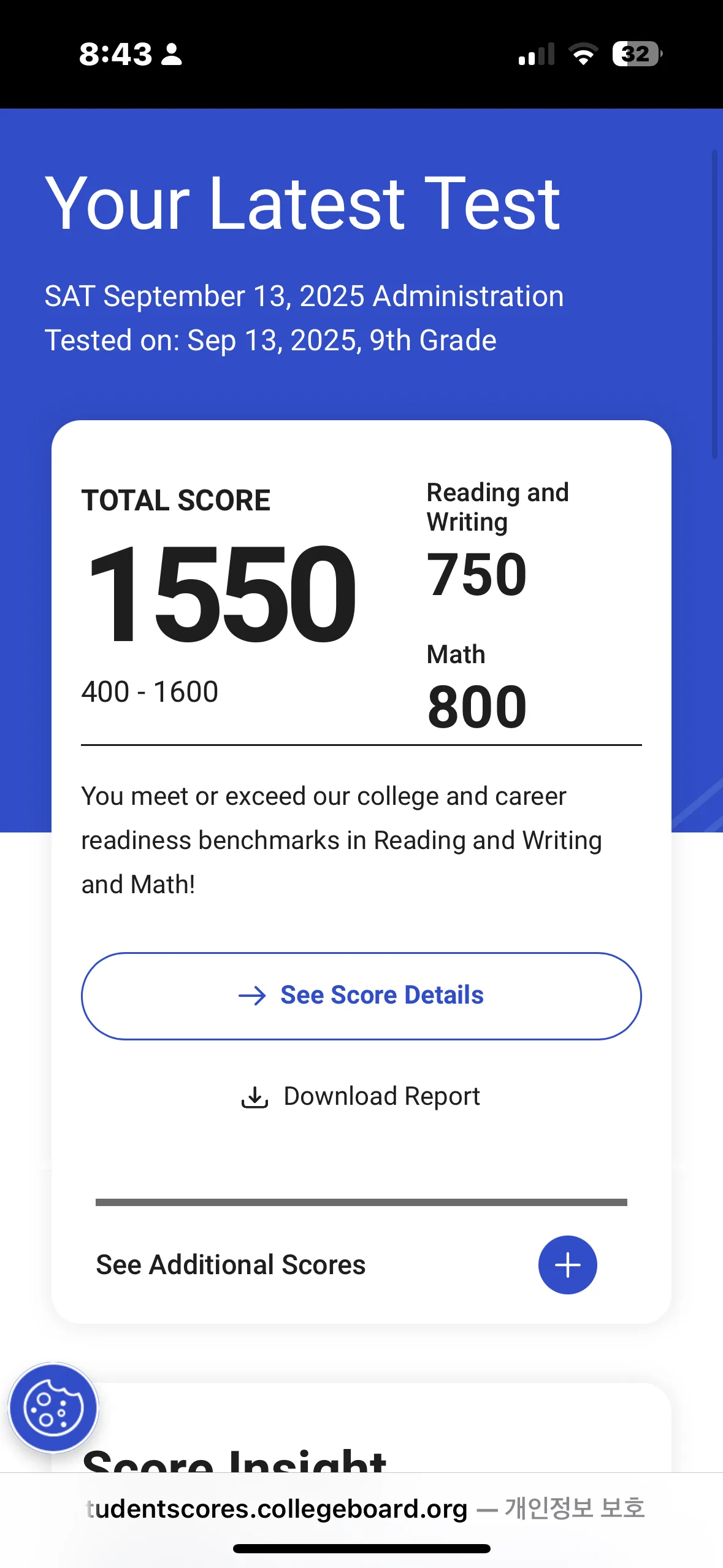
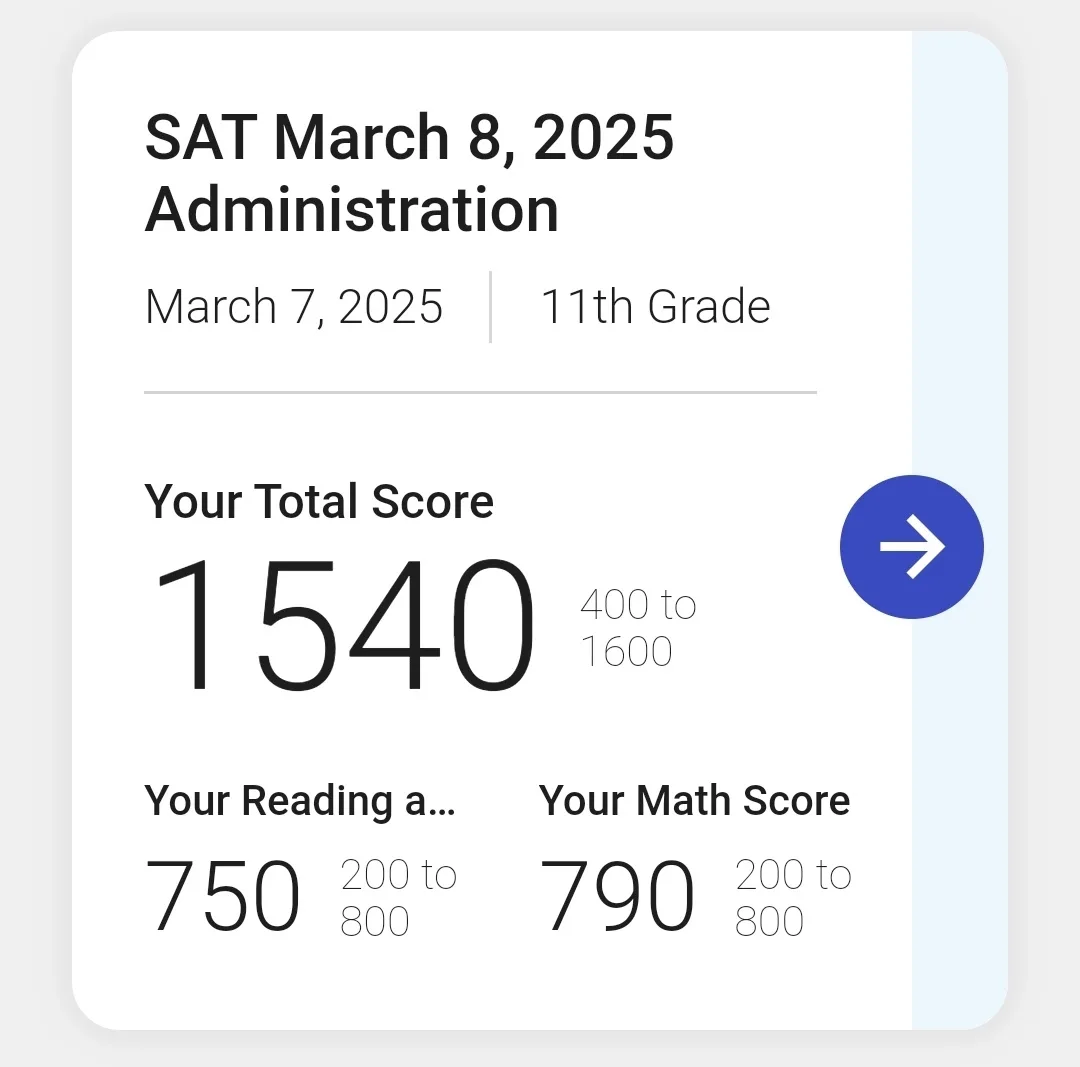
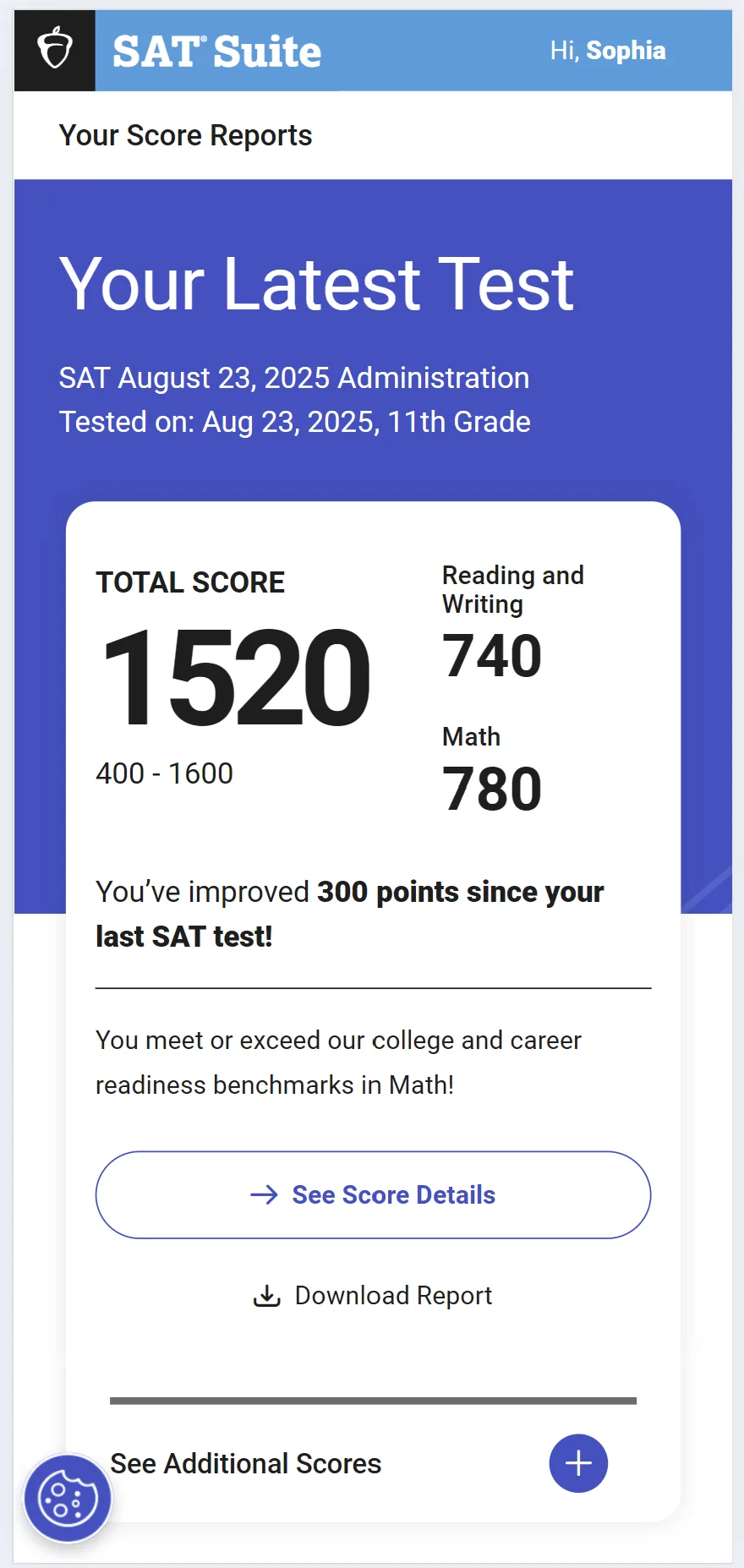
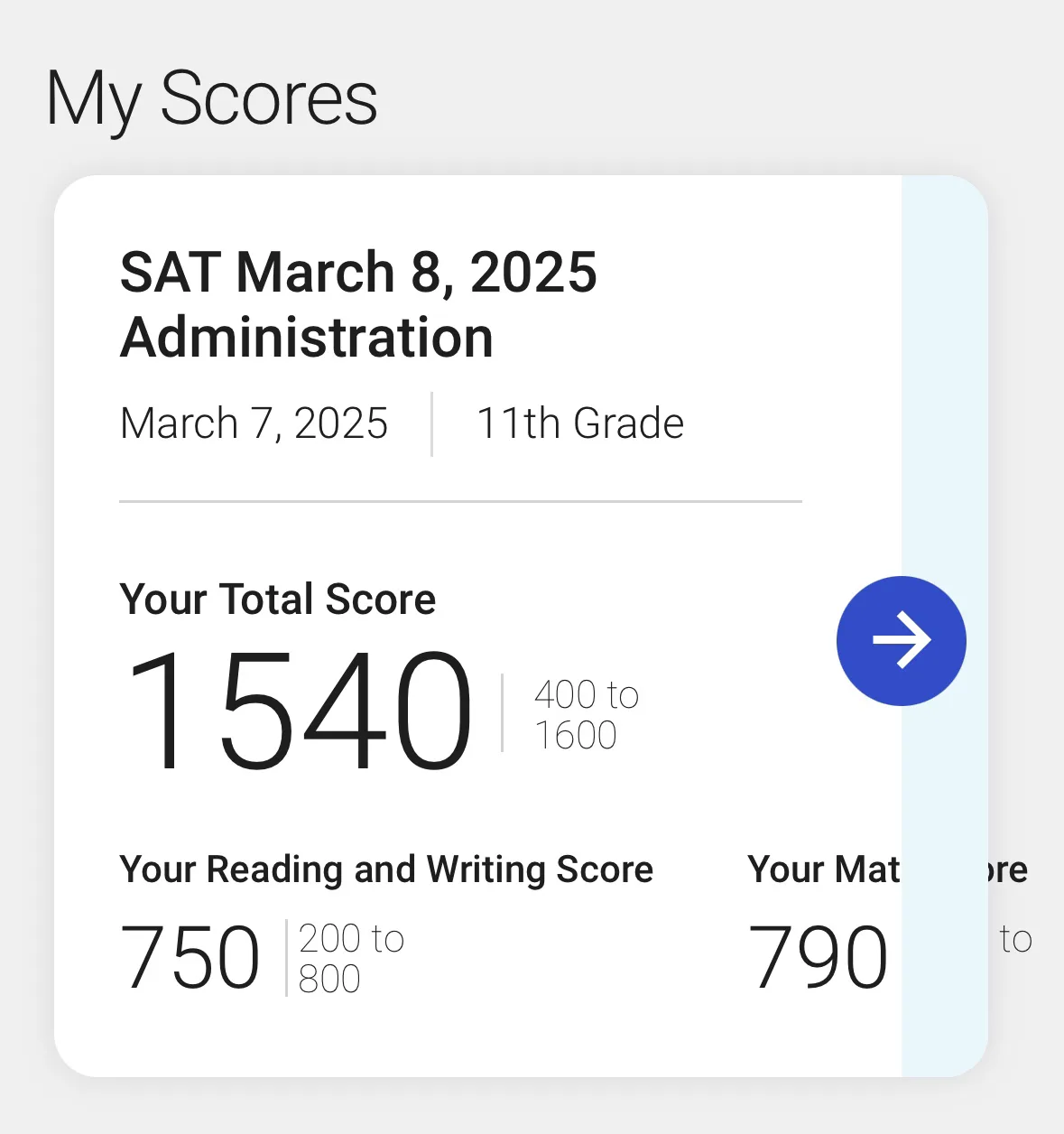
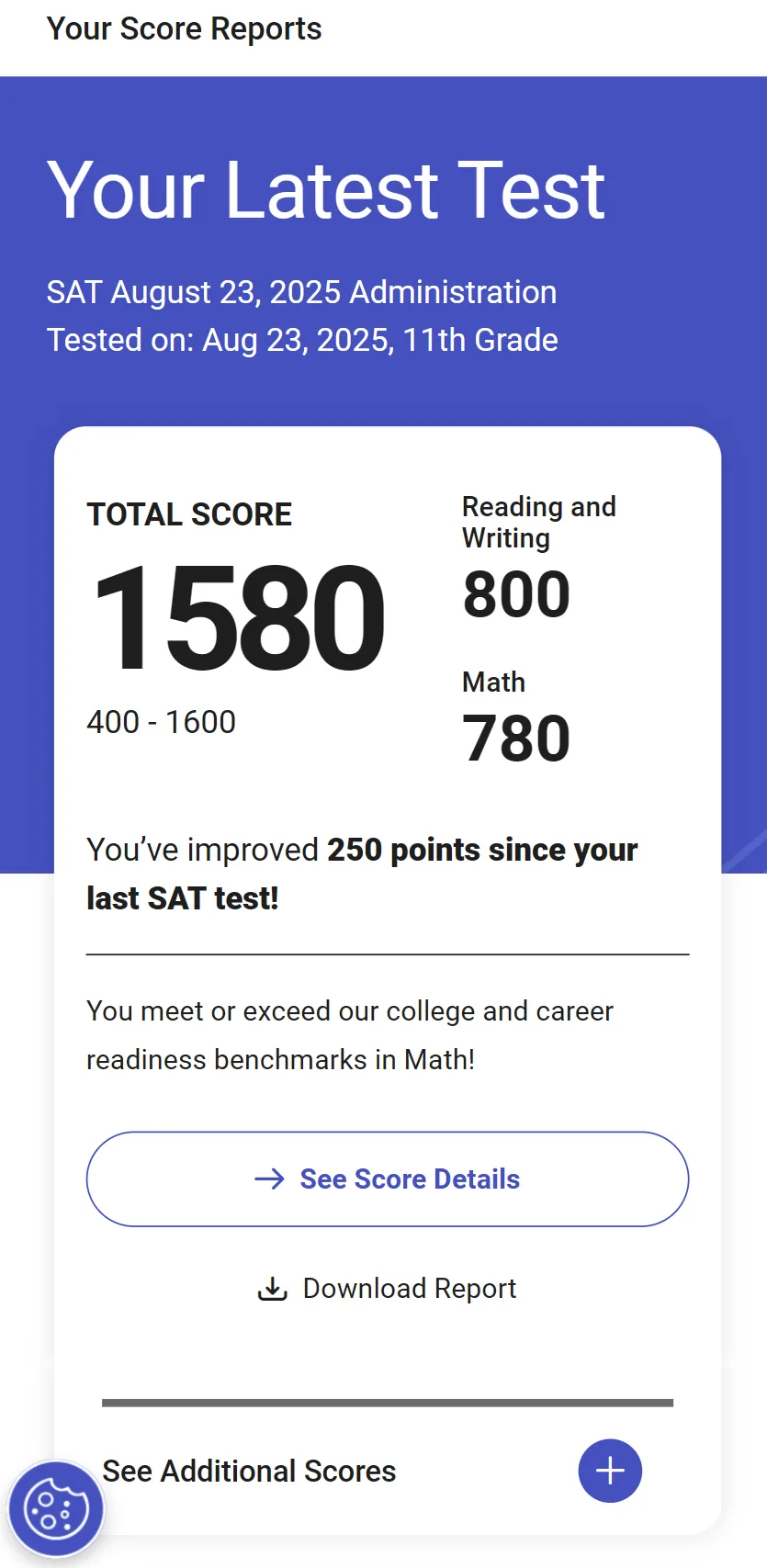
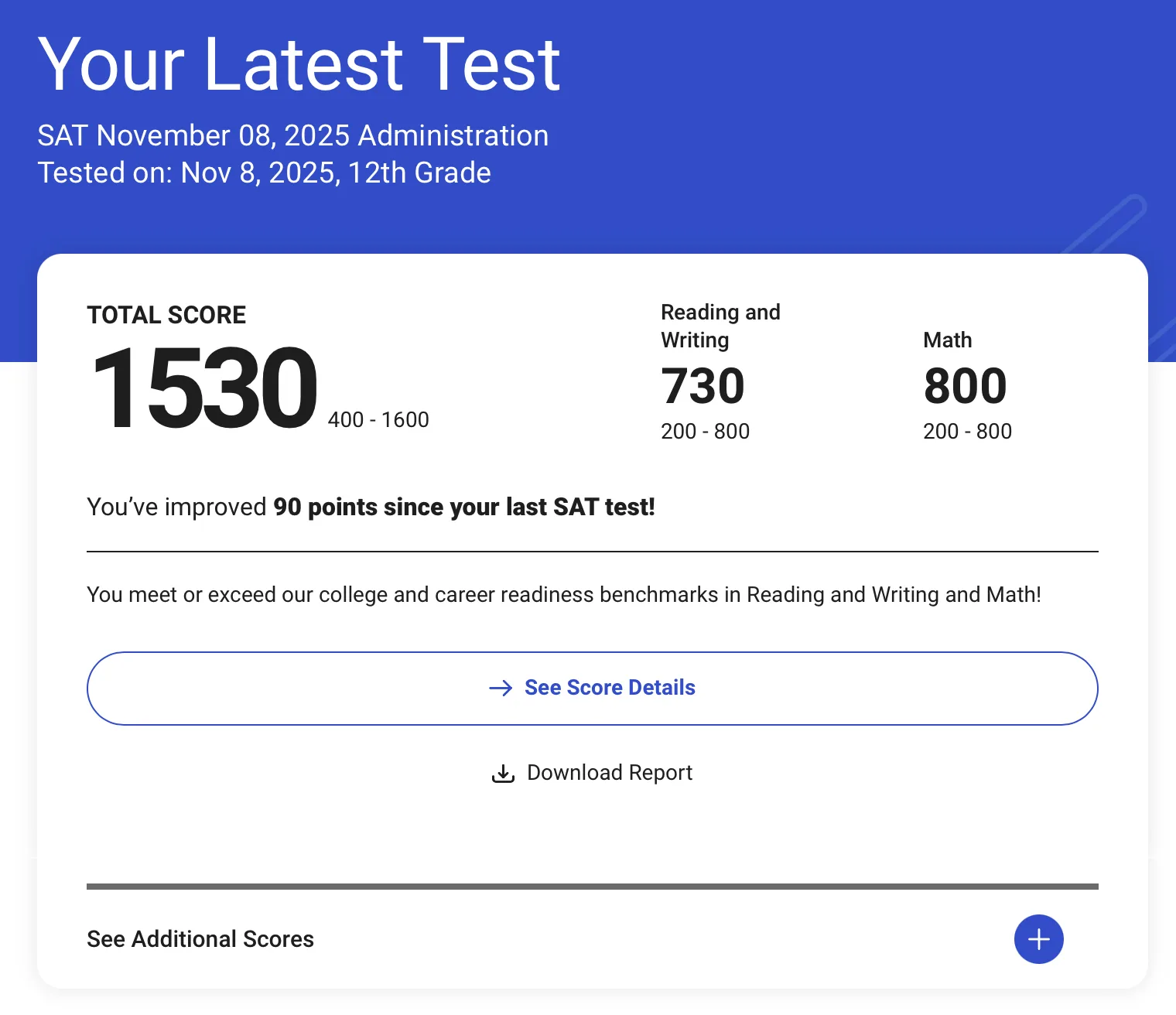
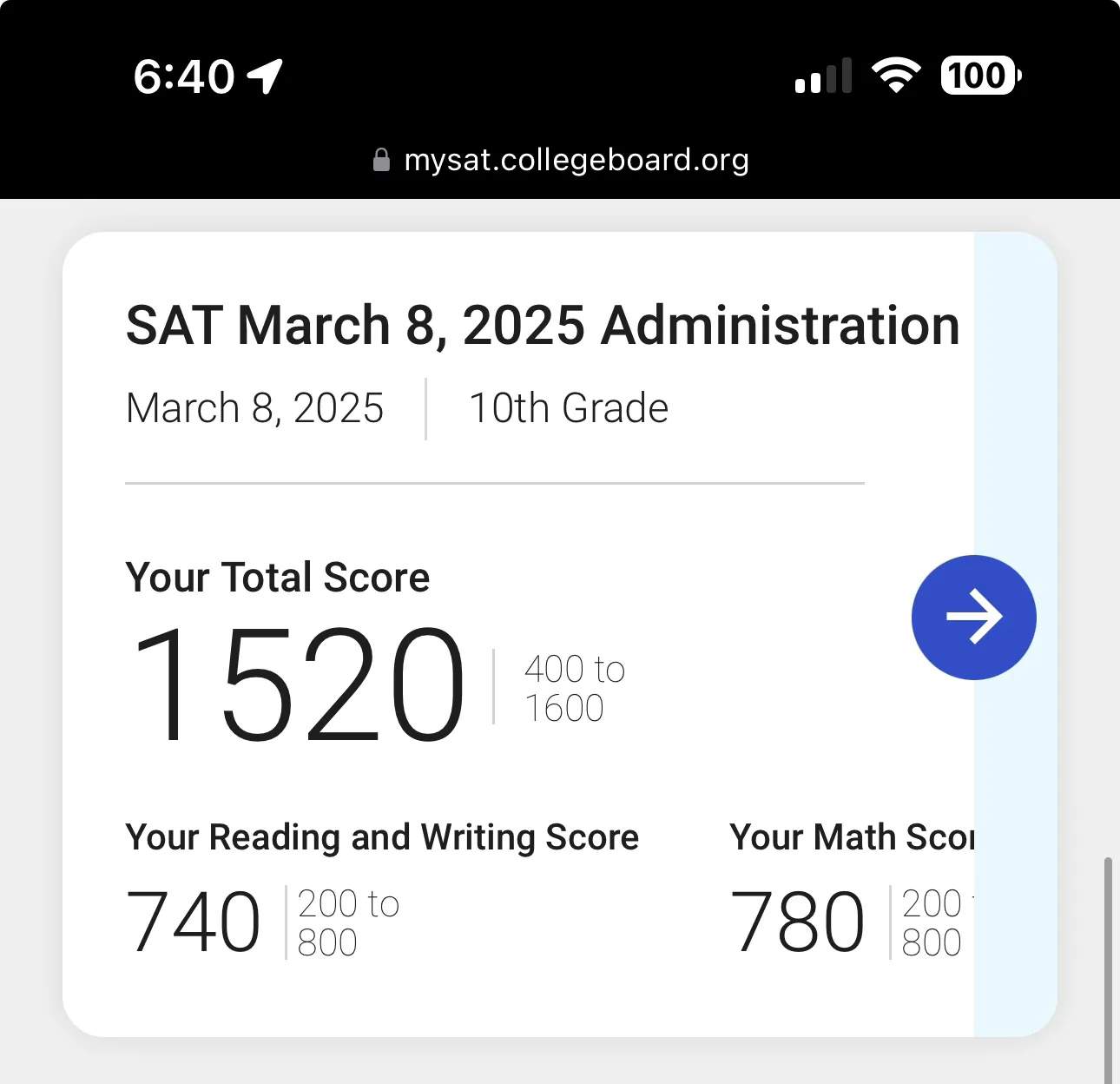
Real College Board reports from our students. The average one gained 150 points to get there.
Wherever you're starting is the point.
The SAT is not an IQ test.
It's a consistency test.
Most students study the SAT like a knowledge exam — facts, formulas, word lists — and that is why they plateau. The test is not asking whether you know something once. It is asking whether the same decision comes out the same way every time that question type appears. The diagram below illustrates the pattern: two students meet the same four question types — inferences, words in context, transitions and linear equations — twelve times each. The student who studied it as a knowledge exam gets 65 per cent of them right, dropping 17 questions across the four types. That student is not missing the content; they are getting most of these right, which is exactly the problem — the decision is not repeatable, so the points leak. The student who drilled each type to a rule gets 96 per cent, dropping only 2. So we don't only teach math and grammar. For each question type you leave with a decision you can follow under a clock, and you drill it until you follow it tired, at minute 58. Get consistent and the score follows.
How the program runs.
Five things running, each on its own clock.
Five things run in parallel, each on its own cadence, for as long as you are with us. We find out where you're losing points: A diagnostic before anything is planned, and not just the score. Your guess rate, how long you sit on a question before skipping, where the time goes. Nothing is scheduled until that is known. You only study what's costing you: The plan is built from your own losses — two things at once: the content you don't know yet, and the habits losing you points on content you do know. Anything that isn't costing you points isn't on it. You stop having to think about it: Every question type gets a decision you can follow under a clock, and then you drill it until you don't have to think about it. That's what stops you losing points on content you already know. Someone senior checks it's working: Session logs and tutor performance get read weekly, by someone senior. When something isn't working it changes that week, not next term. You find out if it stuck: A full test every month under real conditions — full length, in the Test Center, start to finish. Practice under no pressure proves nothing; this is how you learn whether any of it survives the real thing.
Inside the hour.
The one room on the platform that only opens for tutoring students.
Lessons run in the Coach Room, on the same platform you already study on — the same one that runs Study Hall and the Test Center. You and your tutor work the same question live over video, and your cursors are shared, so they see the decision you are making and not just the answer you land on. You can draw on the question with a pen: your marks stay private to you and your tutor, and their pen streams back to you as they draw it. A shared timer keeps the hour honest. The room also opens material written for tutoring lessons and available nowhere else on the platform, in three parts. A strategy for every question type on the test — inferences, words in context, command of evidence, text structure and purpose, cross-text connections, transitions, boundaries, rhetorical synthesis and the rest. A plan for test day itself: walking into the first module, the break, and what to do when you are behind the clock. And an explanation of every concept the SAT can ask about, from grammar rules like subject–verb agreement and comma splices to function notation, circle theorems, quadratics and standard deviation.
Material you can't open anywhere else.
Tutoring onlyWho teaches you.
Fifty tutors on the bench. Your manager picks the one who fits.
We keep a bench of about 50 tutors, and their scores average 1570 on the test they teach. Every one of them cleared the same gate before joining: A two-hour interview — Every hire sits it before they meet a student. Years of tutoring behind them — Not a term or two alongside their own classes. Tutoring is their whole job — Full-time, not something fitted around it. You are not handed whoever is free. Your program manager gathers what the diagnostics say about where you lose points, how you work — your pace, your patience, what you skip — and your personality and tendencies, and matches you with the tutor who fits all three. If the match is not working you get a different tutor, with no friction.
Your manager
runs everything.
Tutoring is one hour. Here's the rest of the week.
A program manager owns the week around the lesson, so nobody has to chase it. Your week is a timetable: one tutoring hour and 5 scheduled study sessions, all set in advance. Runs your diagnostics: Two diagnostics before anything is scheduled, read for more than the score: your guess rate, how long you sit on a question before skipping, and where the time actually goes. The plan is built from what they say. Hand-picks your tutor: Every tutor is hand-picked, background-checked and trial-taught before they meet a student. Your manager picks the one whose record fits the gaps the diagnostics found. Makes sure you're on for every session: Study sessions are scheduled like the lesson is, and your manager checks you're actually online for both. A session you quietly skipped is not something you have to own up to later — it's noticed the same day. Answers between lessons: A direct line to one person who knows your case. Replies in hours, not days. Keeps the test dates straight: Registration deadlines, score releases, test-day logistics. The pace is set so the peak lands on the date that counts. One point of contact, and one person accountable for all of it.
You'll meet your manager first.
They'll find out where you're losing points, then pick your tutor. Leave a number and we'll set up the conversation.
Common Questions
How is this different from other tutoring?
Most tutoring is homework help: whatever the student brings that day. Here the hour has a target before it starts, set from what the diagnostics said is actually costing you points.
Who are your tutors?
Full-time tutors who score 1580+ on the test they teach. Not college students fitting you in between their own classes.
How long does it take?
Most students need 12 to 16 weeks. Start at least three months out, so there's room for full-length tests near the end.
Is this online or in person?
Online, in our own room. You and your tutor work the same question with shared cursors, so they see the decision, not just the answer.
What happens between lessons?
You keep working in Study Hall and the Test Center, and all of it lands in your tutor's panel. Your manager reads the week and writes it up.